Traditional Pho Recipe – A Deeply Comforting Vietnamese Noodle Soup
Few dishes in the world are as comforting, aromatic, and beloved as Vietnamese pho. Pronounced “fuh,” this iconic noodle soup is famous for its crystal-clear broth, tender slices of meat, silky rice noodles, fragrant herbs, and warming spices. More than just a soup, pho is a culinary experience built around patience, balance, and layers of flavor.
Originating in northern Vietnam in the early 20th century, pho has become one of the most recognized dishes in global cuisine. Though there are many variations, the heart of every good pho lies in the broth. A proper pho broth is simmered slowly with beef bones, charred onion and ginger, and spices like star anise, cinnamon, cloves, and coriander. The result is rich yet delicate, savory yet fresh.
Making pho at home may seem intimidating at first, but the process is deeply rewarding. The aroma alone transforms your kitchen into something magical. Once you taste homemade pho, with its fresh herbs and steaming fragrant broth, you’ll understand why it has become a comfort food favorite around the world.
This recipe focuses on classic Vietnamese beef pho, known as Pho Bo, with a deeply flavorful homemade broth and traditional toppings.
What Makes Pho Special?
Pho stands apart from many noodle soups because of its extraordinary broth. Unlike heavy stews or creamy soups, pho broth is light in appearance yet incredibly deep in flavor.
Its signature taste comes from:
- Roasted beef bones
- Charred aromatics
- Toasted spices
- Long simmering
- Fish sauce
- Fresh herbs
Pho is also highly customizable. Each bowl can be adjusted with herbs, lime, chili, sauces, and vegetables to suit personal taste.
The balance is what makes pho unforgettable:
- Rich broth
- Fresh herbs
- Soft noodles
- Tender meat
- Bright lime
- Mild spice
Every spoonful feels layered and harmonious.
Ingredients
For the Broth
- 4 pounds beef bones (marrow bones and knuckle bones work best)
- 1 pound beef brisket
- 1 large onion, halved
- 1 large ginger piece, halved lengthwise
- 5 star anise pods
- 1 cinnamon stick
- 4 cloves
- 1 tablespoon coriander seeds
- 1 tablespoon fennel seeds (optional)
- 2 tablespoons fish sauce
- 1 tablespoon salt
- 1 tablespoon sugar
- 12 cups water
For the Bowls
- 14 ounces dried rice noodles
- Thinly sliced raw beef sirloin or ribeye
- Fresh cilantro
- Green onions
- Thai basil
- Bean sprouts
- Lime wedges
- Sliced jalapeños or Thai chilies
Optional Condiments
- Hoisin sauce
- Sriracha
- Chili oil
Step 1: Prepare the Bones
A clean, clear broth starts with properly prepared bones.
Place the beef bones in a large stockpot and cover with water. Bring to a boil and let cook for 10 minutes.
Drain and rinse the bones thoroughly under cold water.
This blanching step removes impurities and helps create a cleaner broth with better flavor and appearance.
Wash the pot before continuing.
Step 2: Char the Onion and Ginger
One of pho’s signature flavors comes from charred aromatics.
Place the onion and ginger directly over an open flame, under a broiler, or in a dry skillet until blackened and fragrant.
The charring adds smoky depth and subtle sweetness to the broth.
Peel away any excessively burned outer layers if needed.
Step 3: Toast the Spices
In a dry pan over medium heat, toast:
- Star anise
- Cinnamon
- Cloves
- Coriander seeds
- Fennel seeds
Toast for 2 to 3 minutes until fragrant.
This step awakens the essential oils in the spices and gives pho its distinctive warm aroma.
Be careful not to burn them.
Step 4: Build the Broth
Return the cleaned bones to the stockpot.
Add:
- Brisket
- Charred onion
- Charred ginger
- Toasted spices
- Salt
- Sugar
- Water
Bring everything to a gentle boil, then immediately reduce to a low simmer.
Skim foam and impurities from the surface regularly during the first hour.
A slow simmer is essential. Rapid boiling can make the broth cloudy.
Step 5: Simmer Slowly
Simmer the broth uncovered for 4 to 6 hours.
The longer it cooks, the deeper and richer the flavor becomes.
After about 2 hours, remove the brisket once tender and set aside to cool. Thinly slice it for serving later.
Continue simmering the bones for the remaining time.
About 30 minutes before finishing, stir in the fish sauce.
Taste and adjust seasoning if necessary. The broth should taste savory, aromatic, slightly sweet, and deeply beefy.
Step 6: Strain the Broth
Carefully strain the broth through a fine mesh sieve into another pot.
Discard:
- Bones
- Spices
- Onion
- Ginger
You should now have a beautifully clear, fragrant broth.
If desired, skim excess fat from the surface.
Keep the broth hot while preparing the noodles and toppings.
Step 7: Prepare the Noodles
Cook the rice noodles according to package instructions.
Usually, they only need a few minutes in hot water.
Drain and rinse briefly to prevent sticking.
Divide the noodles among serving bowls.
Step 8: Assemble the Pho
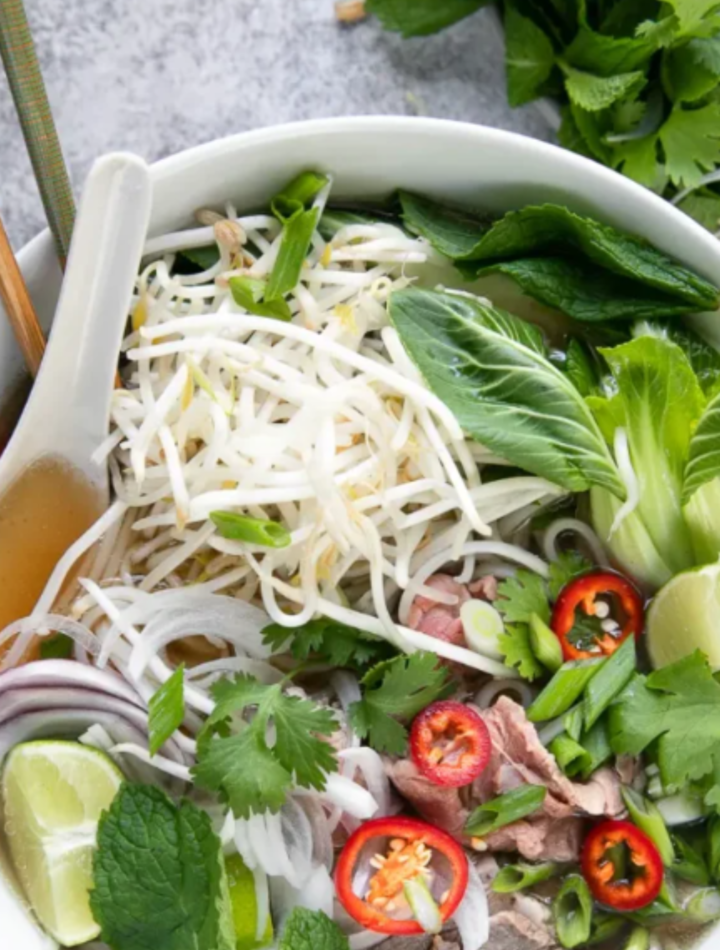
Top the noodles with:
- Sliced cooked brisket
- Thin raw beef slices
- Green onions
- Cilantro
Ladle the boiling hot broth directly over the meat.
The heat from the broth gently cooks the raw beef instantly.
Serve immediately with:
- Bean sprouts
- Thai basil
- Lime wedges
- Jalapeños
Allow everyone to customize their bowl to taste.
Tips for the Best Pho
Use Multiple Types of Bones
Marrow bones provide richness while knuckle bones add body and gelatin.
Simmer Gently
A low simmer creates a cleaner, clearer broth.
Don’t Rush
Pho develops depth slowly. Time is one of the key ingredients.
Char the Aromatics Properly
The smoky flavor from charred onion and ginger is essential.
Toast the Spices
Untoasted spices taste flatter and less aromatic.
Understanding Pho’s Flavor Balance
Great pho broth is never overwhelmingly salty or heavy.
Instead, it balances:
- Savory umami
- Warm spice
- Mild sweetness
- Fresh herbs
- Bright acidity
The garnishes are just as important as the broth itself.
Lime brightens the richness.
Herbs add freshness.
Bean sprouts provide crunch.
Chilies bring heat.
Together they create a complete dish.
Popular Pho Variations
Pho Ga (Chicken Pho)
Made with chicken broth and shredded chicken instead of beef.
Spicy Pho
Add chili oil or extra jalapeños for heat.
Seafood Pho
Features shrimp, fish, or squid in a lighter broth.
Vegetarian Pho
Uses mushroom and vegetable broth with tofu.
Short Rib Pho
Uses tender braised short ribs for extra richness.
What to Serve with Pho
Pho is often served as a complete meal, but a few additions pair beautifully with it.
Vietnamese Spring Rolls
Fresh or fried spring rolls complement pho wonderfully.
Iced Vietnamese Coffee
Strong coffee with sweetened condensed milk balances the savory soup.
Pickled Vegetables
Tangy pickles add brightness and crunch.
Asian Desserts
Mango sticky rice or sesame balls make excellent finishes.
Storage and Reheating
Refrigeration
Store broth separately from noodles for up to 4 days.
Freezing
Pho broth freezes beautifully for up to 3 months.
Reheating
Bring broth to a full boil before serving again.
Fresh noodles and herbs should be added just before eating.
Why Homemade Pho Is Worth It
Restaurant pho is wonderful, but homemade pho offers:
- Deeper flavor control
- Fresher herbs
- Better quality ingredients
- Custom seasoning
- Incredible aroma filling your kitchen
The process itself becomes part of the enjoyment.
Making pho is not just cooking — it’s an experience of patience, care, and tradition.
Cultural Importance of Pho
Pho is one of Vietnam’s national dishes and an important part of daily life.
It is commonly enjoyed:
- For breakfast
- At street stalls
- During family meals
- Late at night
- In celebrations and gatherings
Though regional variations exist, pho always reflects Vietnamese culinary philosophy: balance, freshness, and harmony.
Final Thoughts
Pho is far more than noodle soup. It is a carefully layered dish that combines rich broth, aromatic spices, tender meat, fresh herbs, and silky noodles into something deeply comforting and nourishing.
Making pho at home requires time, but every step contributes to its remarkable flavor. The slow simmering broth, toasted spices, charred aromatics, and fresh garnishes all come together in a bowl that feels both humble and luxurious.
Once you experience the aroma of homemade pho rising from the pot and taste that first spoonful of rich fragrant broth, you’ll understand why this Vietnamese classic has captured hearts around the world for generations.