
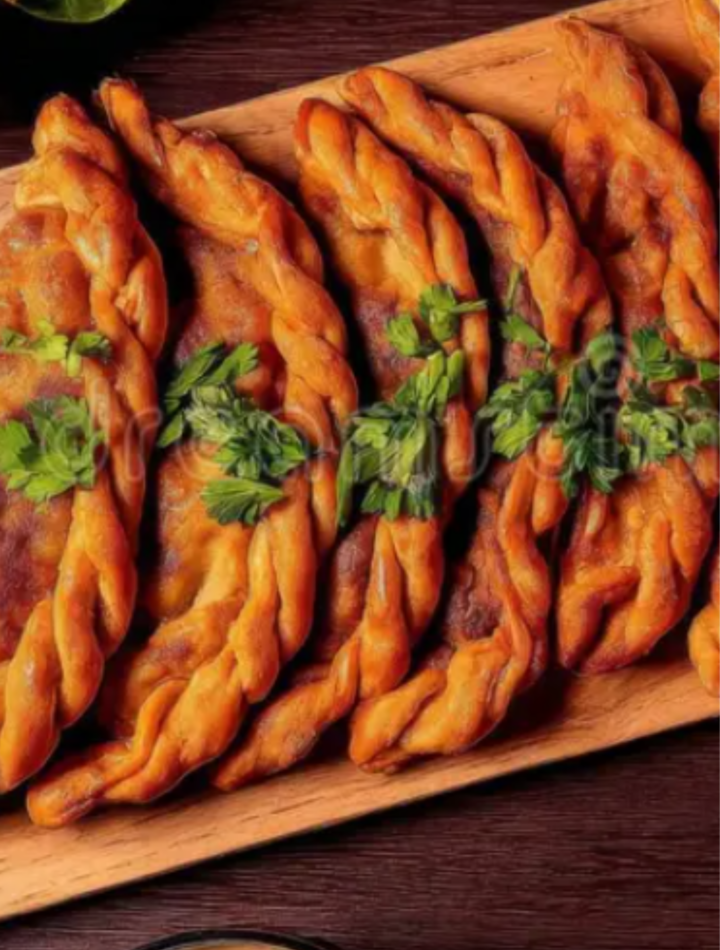
Khuushuur – Traditional Mongolian Meat Pie Recipe
Few foods capture the spirit of Mongolia as beautifully as Khuushuur, the beloved deep-fried meat pie enjoyed across the vast steppes of the country. Crispy on the outside, juicy on the inside, and packed with savory flavor, Khuushuur is a staple at family gatherings, festivals, and especially during Mongolia’s famous Naadam celebrations. These hand-held pastries are similar to turnovers or empanadas, but they carry a distinctly Mongolian identity rooted in nomadic cooking traditions and simple, hearty ingredients.
Traditionally, Khuushuur is made with minced mutton or beef mixed with onions, garlic, and warming spices, all wrapped in a soft dough and fried until golden brown. The result is a crunchy exterior that gives way to rich, flavorful meat filling. Because Mongolia’s cuisine developed in a cold climate with limited agriculture, recipes like Khuushuur rely heavily on meat, dairy, and flour—ingredients that are nourishing and satisfying.
This recipe will guide you step-by-step through making authentic homemade Khuushuur from scratch. Even if you’ve never made dumplings or fried pastries before, the process is straightforward and rewarding.
What Is Khuushuur?
Khuushuur is a fried meat pastry commonly found throughout Mongolia. It is often compared to Russian chebureki or Central Asian meat pies, but Mongolian Khuushuur has its own unique texture and flavor. The dough is rolled thin, filled generously with seasoned meat, folded into a half-moon shape, and fried in oil until crispy and blistered.
Street vendors often sell fresh Khuushuur during festivals, where they are eaten hot by hand. In Mongolian homes, they are served as a comforting meal alongside milk tea, pickles, or simple salads.
One of the secrets to great Khuushuur is the juicy filling. Many cooks add a splash of water or broth to the meat mixture, creating steam inside the pastry while frying. This keeps the filling moist and flavorful.
Ingredients
For the Dough
- 3 cups all-purpose flour
- 1 teaspoon salt
- 1 cup warm water
- 1 tablespoon vegetable oil
For the Filling
- 500 g ground beef or ground mutton
- 1 medium onion, finely chopped
- 3 garlic cloves, minced
- 1 teaspoon salt
- 1 teaspoon black pepper
- 1 teaspoon ground cumin (optional but delicious)
- 3 tablespoons water or beef broth
For Frying
- Vegetable oil, enough for shallow frying
Equipment Needed
- Large mixing bowl
- Rolling pin
- Frying pan or deep skillet
- Slotted spoon or tongs
- Clean kitchen towel
Step 1: Prepare the Dough
Start by making the dough because it needs time to rest. In a large bowl, combine the flour and salt. Gradually pour in the warm water while mixing with your hands or a spoon. Add the tablespoon of oil and continue mixing until a shaggy dough forms.
Transfer the dough to a lightly floured surface and knead for about 8–10 minutes. The dough should become smooth, elastic, and slightly firm. If it feels sticky, add a little extra flour. If it feels too dry, sprinkle in a teaspoon of water at a time.
Once smooth, shape the dough into a ball and cover it with a towel or plastic wrap. Let it rest for at least 30 minutes. Resting allows the gluten to relax, making the dough easier to roll out later.
Step 2: Make the Filling
While the dough rests, prepare the filling. In a bowl, combine the ground meat, chopped onion, garlic, salt, black pepper, and cumin.
Mix thoroughly using your hands or a spoon. Add the water or broth and continue mixing until the filling becomes slightly soft and juicy. This added moisture is important because it creates steam during frying and keeps the inside tender.
Traditional Mongolian cooks often prefer mutton because of its rich flavor, but beef works wonderfully as well. Some families even combine the two meats for extra depth.
Step 3: Divide and Roll the Dough
After resting, place the dough on a floured surface. Divide it into 12 equal pieces. Roll each piece into a ball.
Using a rolling pin, flatten each ball into a thin circle about 6 inches wide. The dough should be thin enough to crisp nicely when fried but strong enough to hold the filling without tearing.
Keep the rolled dough pieces covered with a towel while you work so they do not dry out.
Step 4: Fill the Khuushuur
Place about 2 tablespoons of filling onto one half of each dough circle, leaving a small border around the edge.
Fold the dough over the filling to create a half-moon shape. Press the edges firmly together using your fingers. Then crimp the edges with a fork or twist them slightly for a decorative seal.
Proper sealing is important because it prevents the juices from leaking during frying.
Repeat until all the pies are assembled.
Step 5: Fry Until Golden
Pour vegetable oil into a deep skillet until it reaches about 1 inch deep. Heat the oil over medium heat.
To test the oil, drop in a tiny piece of dough. If it sizzles immediately, the oil is ready.
Carefully place 2–3 Khuushuur into the hot oil without overcrowding the pan. Fry each side for about 3–4 minutes or until golden brown and crispy.
Use tongs or a slotted spoon to remove the fried pies and transfer them to a paper towel-lined plate to drain excess oil.
Continue frying the remaining Khuushuur.
Serving Suggestions
Khuushuur is best served hot and fresh. The crispy crust and juicy filling are at their peak straight from the pan.
Serve them with:
- Pickled vegetables
- Fresh cucumber salad
- Spicy dipping sauce
- Yogurt sauce
- Mongolian milk tea
Some people enjoy adding ketchup or hot sauce, although traditional Mongolian cuisine keeps the flavors simple and meat-focused.
Tips for Perfect Khuushuur
1. Do Not Overfill
Too much filling can cause the dough to burst while frying. Keep the filling evenly spread and leave room around the edges for sealing.
2. Roll Thinly
Thin dough creates the signature crispy texture. Thick dough can become chewy instead of crunchy.
3. Maintain Oil Temperature
If the oil is too hot, the outside burns before the inside cooks. If too cool, the pies absorb excess oil and become greasy.
4. Add Moisture to the Filling
The small amount of water or broth makes a huge difference in creating juicy meat filling.
Variations
Although traditional Khuushuur uses meat, there are many creative variations.
Lamb Khuushuur
Use ground lamb for a richer and more authentic flavor.
Spicy Khuushuur
Add chili flakes or chopped fresh chili peppers to the filling.
Vegetable Khuushuur
Replace meat with mashed potatoes, cabbage, mushrooms, carrots, and onions for a vegetarian version.
Cheese Khuushuur
Add shredded cheese inside the filling for a modern twist.
Storage and Reheating
Khuushuur stores surprisingly well.
Refrigerator
Keep leftovers in an airtight container for up to 3 days.
Freezer
Freeze uncooked or cooked Khuushuur for up to 2 months.
Reheating
Reheat in an oven or air fryer at 180°C (350°F) until crispy again. Avoid microwaving if possible because it softens the crust.
A Taste of Mongolian Tradition
Making Khuushuur at home is more than preparing a meal—it is experiencing a piece of Mongolian culture. The recipe reflects the resourcefulness and hospitality of nomadic life, where simple ingredients are transformed into filling, comforting food.
Whether you serve Khuushuur as a snack, appetizer, or full meal, these crispy meat pies are guaranteed to impress family and friends. Their golden crust, savory aroma, and juicy filling make them irresistible from the very first bite.
Once you master the basic recipe, you can experiment with different fillings and spices while still honoring the heart of this traditional Mongolian favorite. Warm, hearty, and deeply satisfying, Khuushuur is comfort food at its finest.