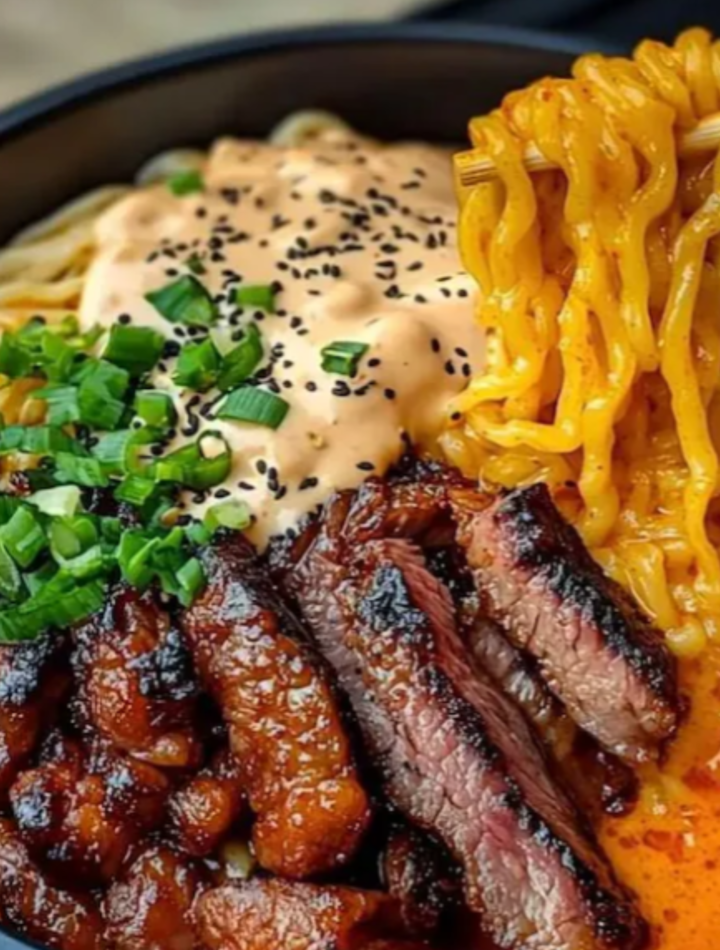
Creamy Spicy Korean Ramen with Grilled Beef (Better Than Takeout!)
If you’re a fan of bold Korean flavors, creamy noodles, and perfectly grilled beef, this Creamy Spicy Korean Ramen with Grilled Beef is a recipe you’ll want to make again and again. Inspired by popular Korean ramen dishes and the rich flavors found in Korean restaurants, this bowl combines spicy ramen broth, tender grilled beef, aromatic garlic, and a silky creamy sauce that transforms ordinary instant noodles into a restaurant-quality meal.
The beauty of this dish lies in its balance. The heat from Korean chili paste, the savory depth of soy sauce, the richness of cream, and the smoky char from grilled beef create an irresistible combination. Best of all, it can be prepared in less than an hour, making it perfect for busy weeknights when you want something special without spending hours in the kitchen.
This recipe serves 4 people.
Ingredients
For the Grilled Beef
1 pound (450 g) flank steak, sirloin steak, or ribeye
2 tablespoons soy sauce
1 tablespoon sesame oil
1 tablespoon brown sugar
3 cloves garlic, minced
1 teaspoon grated fresh ginger
1 teaspoon black pepper
For the Creamy Spicy Ramen
4 packs Korean instant ramen noodles (discard seasoning packets if desired)
1 tablespoon vegetable oil
4 cloves garlic, minced
1 tablespoon ginger, grated
2 tablespoons gochujang (Korean chili paste)
1 tablespoon gochugaru (Korean chili flakes)
4 cups chicken broth
1 cup heavy cream
1 cup whole milk
2 tablespoons soy sauce
1 tablespoon oyster sauce
1 teaspoon sesame oil
1 teaspoon sugar
Vegetables
1 cup sliced mushrooms
1 cup baby spinach
1 small carrot, julienned
2 green onions, sliced
Toppings
2 soft-boiled eggs, halved
Sesame seeds
Extra green onions
Kimchi
Chili oil (optional)
Roasted seaweed strips
Preparing the Beef Marinade
In a medium bowl, combine soy sauce, sesame oil, brown sugar, garlic, ginger, and black pepper. Mix thoroughly until the sugar dissolves.
Place the steak into the marinade and coat evenly. Cover and refrigerate for at least 30 minutes. For even deeper flavor, marinate the beef for up to 4 hours.
The marinade helps tenderize the meat while infusing it with sweet, savory, and aromatic flavors that pair beautifully with the spicy ramen.
Cooking the Soft-Boiled Eggs
Bring a pot of water to a boil.
Carefully lower the eggs into the water and cook for exactly 6½ minutes for a jammy center.
Transfer the eggs immediately into an ice-water bath and allow them to cool completely.
Peel the eggs and set aside until serving time.
A perfectly cooked ramen egg adds richness and authenticity to the final bowl.
Grilling the Beef
Preheat a grill or grill pan over medium-high heat.
Remove the beef from the marinade and let excess liquid drip off.
Grill for approximately 4 to 5 minutes per side for medium-rare, or longer if desired.
The goal is to develop a beautiful caramelized crust while keeping the inside juicy and tender.
After grilling, transfer the beef to a cutting board and let it rest for 10 minutes.
Slice thinly against the grain. Cutting against the grain shortens the muscle fibers and produces exceptionally tender bites.
Set aside while preparing the ramen.
Building the Creamy Spicy Broth
Heat vegetable oil in a large pot over medium heat.
Add minced garlic and grated ginger.
Cook for about one minute until fragrant.
Stir in the gochujang and gochugaru.
Cook for another minute while stirring continuously. This step blooms the spices and develops a deeper flavor profile.
Pour in the chicken broth and stir thoroughly to dissolve the gochujang completely.
Add soy sauce, oyster sauce, sesame oil, and sugar.
Bring everything to a gentle simmer.
Allow the broth to cook for about 10 minutes. During this time, the flavors will blend together into a rich, spicy base.
Creating the Creamy Texture
Reduce the heat to low.
Slowly pour in the heavy cream and milk while stirring continuously.
The broth will transform into a luxurious, velvety soup with a beautiful orange-red color.
Avoid boiling vigorously after adding dairy, as excessive heat can sometimes cause the cream to separate.
Let the broth gently simmer for another 5 minutes.
Taste and adjust seasoning if needed.
For more heat, add additional gochugaru.
For more richness, add a splash of cream.
Cooking the Vegetables
Add mushrooms and carrots to the broth.
Cook for about 4 minutes until slightly tender.
Add the spinach during the last minute of cooking.
The vegetables should remain vibrant and maintain some texture rather than becoming overly soft.
This combination adds freshness, color, and nutritional balance to the rich broth.
Cooking the Ramen Noodles
Bring a separate pot of water to a boil.
Cook the ramen noodles according to package directions, usually 3 to 4 minutes.
Drain immediately.
Do not overcook the noodles because they will continue softening once placed in the hot broth.
Keeping the noodles separate until serving helps preserve their ideal texture.
Assembling the Bowls
Divide the cooked noodles among four large serving bowls.
Ladle generous amounts of the creamy spicy broth and vegetables over the noodles.
Arrange several slices of grilled beef on top of each bowl.
Add one halved soft-boiled egg.
Garnish with:
Green onions
Sesame seeds
Seaweed strips
Kimchi
Chili oil if desired
The finished bowl should look vibrant, colorful, and incredibly inviting.
Why This Recipe Is Better Than Takeout
Many restaurant ramen dishes rely heavily on sodium and pre-made soup bases.
Making ramen at home allows you to:
Control spice levels
Use higher-quality beef
Adjust richness to your preference
Add extra vegetables
Enjoy freshly grilled meat
The homemade creamy broth tastes fresher and more balanced than many takeout versions.
The grilled beef also contributes a smoky flavor that elevates the entire dish.
Expert Tips
Choose the Right Beef
Ribeye offers the richest flavor due to its marbling.
Sirloin provides excellent value and tenderness.
Flank steak delivers a traditional grilled texture and absorbs marinades beautifully.
Don’t Skip Resting the Beef
Allowing the steak to rest after grilling keeps the juices inside the meat rather than running onto the cutting board.
Bloom the Chili Paste
Cooking the gochujang briefly before adding liquid develops a deeper and more complex flavor.
Use Fresh Garlic and Ginger
Fresh aromatics make a noticeable difference in Korean-inspired dishes.
Add Kimchi at Serving Time
Kimchi provides acidity and crunch that balance the creamy broth perfectly.
Variations
Extra Spicy Version
Add:
Additional gochugaru
Fresh sliced Korean peppers
Extra chili oil
Cheesy Korean Ramen
Stir in:
1 cup shredded mozzarella
½ cup grated cheddar
The cheese melts into the broth and creates an ultra-creamy texture.
Seafood Version
Replace beef with:
Shrimp
Squid
Scallops
The creamy spicy broth pairs wonderfully with seafood.
Chicken Version
Substitute grilled chicken thighs for the beef.
Chicken thighs remain juicy and absorb Korean marinades exceptionally well.
Storage and Reheating
Store broth and noodles separately in airtight containers.
Refrigerate for up to 3 days.
Reheat the broth gently over low heat.
Add a splash of milk if the broth thickens too much.
Warm the noodles separately and combine just before serving.
This method helps maintain the best texture.
Final Thoughts
Creamy Spicy Korean Ramen with Grilled Beef combines everything people love about comfort food: rich broth, spicy Korean flavors, tender grilled meat, chewy noodles, and satisfying toppings. The creamy gochujang-based soup delivers warmth and depth, while the smoky grilled beef transforms a simple noodle bowl into a memorable meal. Whether you’re cooking for family, friends, or simply treating yourself, this homemade ramen proves that a restaurant-quality Korean-inspired dinner can be created right in your own kitchen—and it may very well become better than your favorite takeout order.