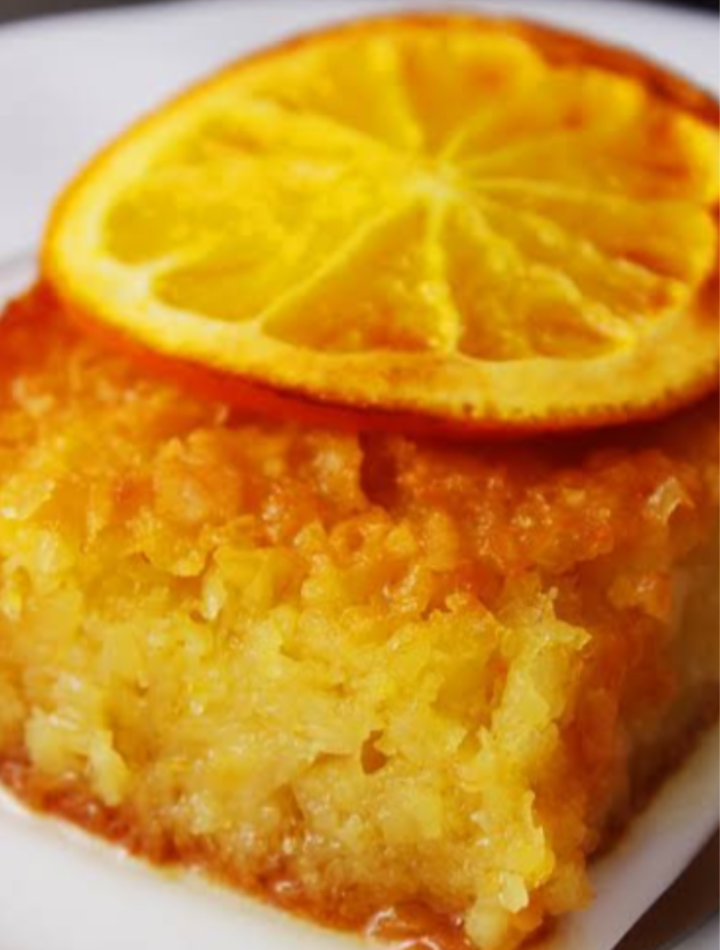
Greek Orange Semolina Cake with Orange Syrup
Greek Orange Semolina Cake, often inspired by the traditional dessert known as “Revani” or “Ravani,” is a wonderfully moist and aromatic cake soaked in a bright citrus syrup. This beloved Mediterranean dessert combines the rich texture of semolina with the fresh flavor of oranges, creating a cake that is both comforting and refreshing. The syrup seeps into every bite, giving the cake its signature juicy texture and irresistible sweetness.
Perfect for celebrations, afternoon tea, family dinners, or festive gatherings, this cake is elegant yet simple to prepare. The fragrance of orange zest and freshly squeezed juice fills the kitchen while baking, making this recipe as delightful to prepare as it is to eat.
The beauty of this cake lies in its balance. The semolina provides a slightly grainy texture that contrasts beautifully with the soft sponge-like crumb, while the orange syrup keeps everything moist and flavorful without becoming overly heavy.
This traditional Greek-style dessert is especially delicious when served chilled, topped with whipped cream, yogurt, or crushed pistachios.
Ingredients
For the Cake
- 1 cup fine semolina
- 1 cup all-purpose flour
- 1 cup granulated sugar
- 1 cup Greek yogurt
- 3 large eggs
- 1/2 cup vegetable oil or melted butter
- 1 tablespoon orange zest
- 1/2 cup freshly squeezed orange juice
- 1 teaspoon vanilla extract
- 2 teaspoons baking powder
- 1/4 teaspoon salt
For the Orange Syrup
- 1 cup sugar
- 1 cup water
- 1 cup freshly squeezed orange juice
- 1 tablespoon lemon juice
- 1 teaspoon orange blossom water (optional)
- Thin strips of orange peel
Optional Garnishes
- Crushed pistachios
- Sliced almonds
- Powdered sugar
- Orange slices
- Whipped cream
Equipment Needed
- Large mixing bowls
- Whisk or hand mixer
- Measuring cups and spoons
- 9-inch round baking pan
- Small saucepan
- Cooling rack
- Citrus zester
Step 1: Prepare the Baking Pan and Oven
Preheat your oven to 350°F (175°C).
Grease a 9-inch round baking pan with butter or oil, then lightly dust with flour or semolina to prevent sticking.
A properly prepared pan helps the cake bake evenly and ensures a clean release after baking.
Step 2: Mix the Wet Ingredients
In a large bowl, whisk together:
- Greek yogurt
- Sugar
- Eggs
- Vegetable oil or melted butter
- Vanilla extract
- Orange zest
- Orange juice
Mix until smooth and creamy.
The yogurt adds richness and moisture, while the orange zest intensifies the fresh citrus aroma. Using freshly squeezed orange juice gives the cake a vibrant natural flavor that bottled juice cannot fully match.
Step 3: Combine the Dry Ingredients
In a separate bowl, combine:
- Fine semolina
- Flour
- Baking powder
- Salt
Stir thoroughly so the baking powder distributes evenly throughout the mixture.
Semolina is the key ingredient that gives this cake its classic Greek texture. Fine semolina works best for a softer crumb, while coarse semolina creates a more rustic texture.
Step 4: Prepare the Batter
Gradually add the dry ingredients to the wet mixture.
Fold gently with a spatula or whisk until just combined.
Avoid overmixing, as too much stirring may make the cake dense instead of light and tender.
Allow the batter to rest for about 10 minutes before baking. This resting time allows the semolina to absorb moisture and soften properly.
The batter will become slightly thicker as it rests.
Step 5: Pour into the Pan
Pour the batter into the prepared pan and smooth the top evenly.
If desired, sprinkle sliced almonds on top before baking for extra crunch and decoration.
The cake batter should look thick yet pourable.
Step 6: Bake the Cake
Bake for approximately 35–40 minutes, or until:
- The top becomes golden brown
- The edges pull slightly from the pan
- A toothpick inserted into the center comes out clean
The cake will develop a beautiful golden color and an incredible citrus aroma while baking.
Be careful not to overbake, as the syrup will later add additional moisture.
Step 7: Prepare the Orange Syrup
While the cake bakes, prepare the syrup.
In a saucepan, combine:
- Sugar
- Water
- Orange juice
- Lemon juice
- Orange peel strips
Bring the mixture to a gentle boil over medium heat.
Reduce the heat and simmer for about 10 minutes until slightly thickened.
Remove from heat and stir in orange blossom water if using.
The syrup should be fragrant, glossy, and lightly thickened but still pourable.
The lemon juice balances the sweetness and brightens the orange flavor beautifully.
Step 8: Soak the Cake
Once the cake is finished baking, allow it to cool for about 10 minutes.
Using a skewer or toothpick, poke small holes all over the surface of the cake.
Slowly pour the warm syrup over the warm cake, allowing it to absorb gradually.
Take your time during this step to ensure even absorption.
The semolina acts like a sponge, soaking up the citrus syrup while maintaining structure and texture.
Allow the cake to cool completely before serving. For best results, refrigerate the cake for at least 2 hours before slicing.
Serving Suggestions
Greek Orange Semolina Cake can be served in many delicious ways.
Traditional Style
Serve chilled with a sprinkle of crushed pistachios or almonds.
With Cream
Pair slices with:
- Whipped cream
- Vanilla ice cream
- Greek yogurt
- Mascarpone cream
With Fruit
Fresh fruit complements the citrus flavor wonderfully:
- Strawberries
- Figs
- Blueberries
- Pomegranate seeds
Tips for Success
Use Fresh Orange Juice
Freshly squeezed juice provides the brightest and most natural flavor.
Let the Syrup Absorb Slowly
Pouring the syrup gradually prevents sogginess and ensures even texture.
Rest Before Serving
The cake tastes even better after resting for several hours because the flavors deepen and the syrup distributes evenly.
Fine Semolina is Best
Fine semolina creates a softer, smoother cake texture.
Don’t Skip the Orange Zest
The zest contains essential oils that give the cake its intense orange fragrance.
Delicious Variations
Coconut Orange Cake
Add 1/2 cup shredded coconut to the batter for tropical flavor.
Honey Orange Cake
Replace part of the sugar with honey for a richer Mediterranean-style sweetness.
Almond Orange Cake
Add ground almonds to the batter for nuttier flavor and extra richness.
Spiced Orange Cake
Add cinnamon or cardamom for warm spice notes.
Chocolate Orange Semolina Cake
Mix in dark chocolate chips for a luxurious twist.
Storage Instructions
Refrigerator
Store covered in the refrigerator for up to 5 days.
Because of the syrup, the cake remains moist and flavorful for several days.
Freezer
Freeze individual slices wrapped tightly for up to 2 months.
Thaw overnight in the refrigerator before serving.
Why This Cake is So Loved
Greek Orange Semolina Cake remains popular because it combines:
- Bright citrus flavor
- Moist texture
- Simple ingredients
- Elegant presentation
- Easy preparation
It is both rustic and sophisticated at the same time.
The syrup transforms the cake into something incredibly tender and luxurious while the semolina adds a unique texture that makes every bite satisfying.
Final Thoughts
Greek Orange Semolina Cake with Orange Syrup is a timeless Mediterranean dessert that brings sunshine and warmth to the table. Its vibrant citrus aroma, moist crumb, and delicate sweetness make it unforgettable.
Whether served at a holiday gathering, family dinner, afternoon tea, or weekend celebration, this cake always feels special. The combination of semolina and orange syrup creates a dessert that is comforting, refreshing, and beautifully balanced.
Once you experience the rich texture and bright flavor of this traditional Greek-inspired cake, it is likely to become one of your favorite homemade desserts.