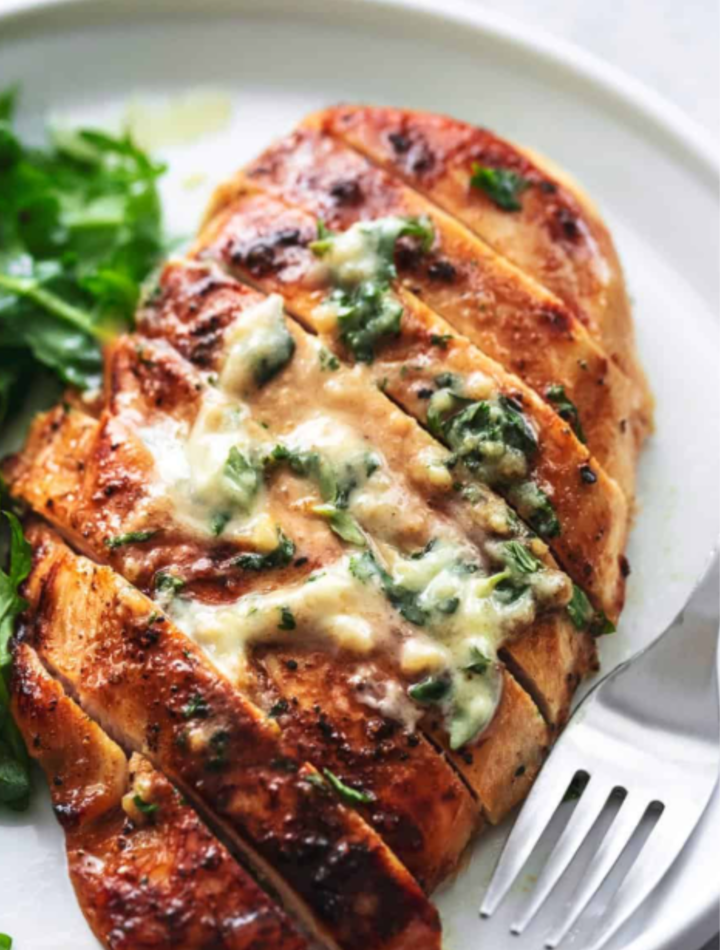
Roast Chicken with Herb Butter
Few dishes are as comforting and impressive as a perfectly roasted chicken. Golden-brown skin, juicy meat, and the aroma of fresh herbs filling the kitchen make this classic recipe a favorite for family dinners, special occasions, and meal preparation. This Roast Chicken with Herb Butter recipe combines simple ingredients with timeless techniques to create a flavorful and tender chicken that will become a staple in your cooking repertoire.
Why You’ll Love This Recipe
The secret to this roast chicken lies in the herb butter. By rubbing a mixture of softened butter, garlic, and fresh herbs under and over the skin, the chicken stays moist while developing a beautifully crisp and flavorful exterior. The butter melts during roasting, basting the bird naturally and infusing every bite with rich herbal notes.
This recipe is suitable for beginners and experienced cooks alike. While the process takes some time, most of it is hands-off, allowing the oven to do the work while you prepare side dishes or relax.
Ingredients
For the Chicken
- 1 whole chicken (about 4–5 pounds / 1.8–2.3 kg)
- 2 tablespoons olive oil
- 1 lemon, halved
- 1 onion, quartered
- 2 sprigs fresh rosemary
- 4 sprigs fresh thyme
- 1 teaspoon salt
- ½ teaspoon black pepper
For the Herb Butter
- ½ cup (115 g) unsalted butter, softened
- 3 cloves garlic, minced
- 1 tablespoon fresh parsley, finely chopped
- 1 tablespoon fresh thyme leaves
- 1 tablespoon fresh rosemary, finely chopped
- 1 teaspoon lemon zest
- 1 teaspoon salt
- ½ teaspoon black pepper
Optional Vegetables
- 4 carrots, cut into chunks
- 4 potatoes, quartered
- 2 celery stalks, sliced
- 1 onion, cut into wedges
Equipment Needed
- Roasting pan or large oven-safe skillet
- Kitchen twine (optional)
- Meat thermometer
- Small mixing bowl
- Basting brush or spoon
Preparation
Begin by removing the chicken from the refrigerator about 30 to 45 minutes before cooking. Allowing it to come closer to room temperature promotes more even cooking.
Preheat your oven to 425°F (220°C). This higher temperature helps create crispy skin while sealing in juices.
Pat the chicken dry with paper towels. Moisture on the skin can prevent proper browning, so take a few extra moments to ensure the bird is dry.
Making the Herb Butter
In a small bowl, combine the softened butter, minced garlic, parsley, thyme, rosemary, lemon zest, salt, and black pepper.
Mix thoroughly until all ingredients are evenly incorporated. The butter should be fragrant and speckled with fresh green herbs.
This herb butter can also be prepared a day ahead and stored in the refrigerator. Allow it to soften before using.
Preparing the Chicken
Place the chicken breast-side up on a clean work surface.
Carefully loosen the skin over the breast and thighs by sliding your fingers underneath. Be gentle to avoid tearing the skin.
Take about two-thirds of the herb butter and spread it underneath the loosened skin. Massage it evenly over the breast meat and thighs. This step is essential because it flavors the meat directly rather than only seasoning the surface.
Rub the remaining herb butter all over the outside of the chicken.
Season lightly with additional salt and pepper if desired.
Stuff the cavity with the lemon halves, onion quarters, rosemary sprigs, and thyme sprigs. These aromatics release steam and fragrance during roasting, enhancing the flavor of the chicken.
If desired, tie the legs together with kitchen twine and tuck the wing tips underneath the bird. This helps the chicken cook evenly and creates a neat presentation.
Preparing the Vegetables
If using vegetables, arrange the carrots, potatoes, celery, and onion in the bottom of the roasting pan.
Drizzle them with olive oil and season with a little salt and pepper.
Place the prepared chicken on top of the vegetables or on a roasting rack above them. As the chicken cooks, flavorful juices will drip onto the vegetables, making them incredibly delicious.
Roasting the Chicken
Transfer the roasting pan to the preheated oven.
Roast at 425°F (220°C) for approximately 15 minutes per pound. A 4–5 pound chicken typically requires 60–75 minutes.
Halfway through cooking, carefully spoon some pan juices over the chicken. While frequent basting isn’t necessary, one or two bastes can add extra flavor and color.
Monitor the skin as it roasts. If it begins browning too quickly, loosely tent the chicken with aluminum foil.
The chicken is fully cooked when the thickest part of the thigh reaches 165°F (74°C) on an instant-read thermometer. The juices should run clear when pierced.
Resting the Chicken
One of the most important steps is allowing the chicken to rest after roasting.
Remove the chicken from the oven and transfer it to a cutting board or serving platter.
Loosely cover with foil and let it rest for 15–20 minutes.
During this time, the juices redistribute throughout the meat, resulting in a more tender and flavorful chicken. Cutting too soon can cause the juices to run out, leaving the meat drier.
Making a Simple Pan Sauce
While the chicken rests, you can make a quick pan sauce.
Place the roasting pan over medium heat on the stovetop.
Add ½ cup chicken broth or white wine to the pan and scrape up any browned bits from the bottom.
Simmer for 5–7 minutes until slightly reduced.
For a richer sauce, whisk in a tablespoon of cold butter just before serving.
Strain if desired and serve alongside the carved chicken.
Carving the Chicken
Start by removing the legs and thighs.
Next, separate the drumsticks from the thighs if desired.
Remove the wings.
Finally, slice the breast meat against the grain into even portions.
Arrange everything on a serving platter and garnish with fresh herbs and lemon slices for an elegant presentation.
Serving Suggestions
This roast chicken pairs wonderfully with many side dishes:
- Roasted garlic mashed potatoes
- Green beans with almonds
- Steamed asparagus
- Buttered peas
- Garden salad
- Rice pilaf
- Crusty artisan bread
The roasted vegetables from the pan often provide enough accompaniment for a complete meal.
Storage
Store leftover chicken in an airtight container in the refrigerator for up to 4 days.
To reheat, place the chicken in a baking dish with a splash of broth and cover with foil. Warm in a 325°F (165°C) oven until heated through.
Avoid microwaving for extended periods, as it may dry out the meat.
Using Leftovers
One of the best aspects of roast chicken is its versatility.
Leftover meat can be used for:
- Chicken sandwiches
- Caesar salad
- Chicken soup
- Chicken pot pie
- Tacos and wraps
- Pasta dishes
- Fried rice
Don’t discard the carcass. Simmer it with vegetables and herbs to create a flavorful homemade chicken stock.
Tips for Success
- Always pat the chicken dry before seasoning.
- Use softened butter for easy spreading.
- Season under the skin whenever possible.
- Use a thermometer rather than relying solely on cooking time.
- Let the chicken rest before carving.
- Save the pan drippings for sauce or gravy.
- Choose fresh herbs for the best flavor.
Conclusion
Roast Chicken with Herb Butter is a timeless recipe that delivers exceptional flavor with surprisingly little effort. The combination of rich butter, fragrant herbs, garlic, and lemon creates a beautifully seasoned bird with crispy skin and juicy meat. Whether you’re preparing a Sunday family dinner, hosting guests, or simply craving a comforting homemade meal, this recipe offers reliable results every time. Serve it with roasted vegetables and a simple pan sauce for a meal that is both rustic and elegant, proving that sometimes the simplest dishes are truly the most memorable.