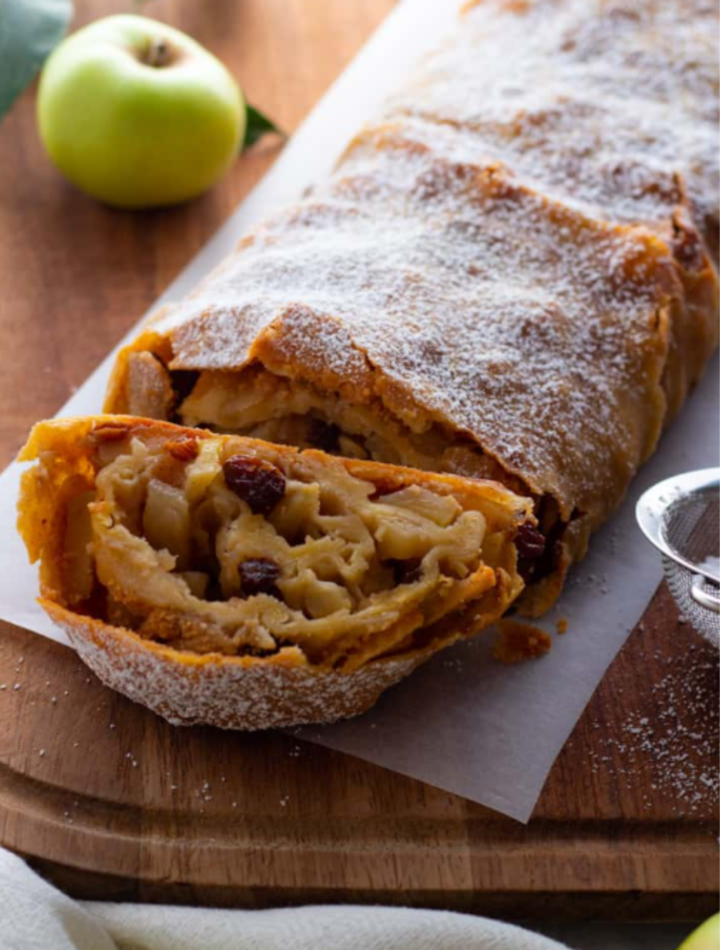
Traditional Apple Strudel Recipe
Traditional Apple Strudel is one of the most famous pastries of Central Europe, beloved for its delicate, paper-thin dough wrapped around a fragrant filling of apples, cinnamon, raisins, and breadcrumbs. Although often associated with Austria, particularly the city of Vienna, apple strudel has become a cherished dessert throughout Germany, Hungary, the Czech Republic, and beyond. Its crisp, flaky layers and sweet-tart filling make it a timeless treat that can be enjoyed for breakfast, dessert, or an afternoon coffee break.
Making an authentic apple strudel from scratch is a rewarding culinary project. The dough is stretched until nearly transparent, then filled and rolled into a long log before baking until golden brown. While the technique may seem intimidating at first, following the steps carefully will help you achieve a delicious homemade strudel worthy of any European bakery.
Ingredients
For the Dough
- 2 cups (250 g) all-purpose flour
- 1/2 teaspoon salt
- 2 tablespoons vegetable oil
- 1 teaspoon white vinegar
- 3/4 cup (180 ml) warm water
For the Apple Filling
- 6 large tart apples, peeled, cored, and thinly sliced
- 1/2 cup (100 g) granulated sugar
- 1 teaspoon ground cinnamon
- 1 tablespoon lemon juice
- 1/2 cup (75 g) raisins
- 1/4 cup (30 g) chopped walnuts or almonds (optional)
For the Breadcrumb Mixture
- 1 cup (100 g) plain breadcrumbs
- 4 tablespoons unsalted butter
For Assembly
- 6 tablespoons melted butter
- Powdered sugar for dusting
Understanding Apple Strudel
The hallmark of traditional apple strudel is its extraordinarily thin dough. Unlike puff pastry, strudel dough contains no layers of butter folded into it. Instead, the dough is stretched until it becomes almost translucent. This creates delicate layers that become crisp and flaky during baking.
Historically, strudel dates back centuries and reflects culinary influences that spread throughout the former Austro-Hungarian Empire. Today, it remains a symbol of classic European baking traditions.
Step 1: Prepare the Dough
In a large mixing bowl, combine the flour and salt.
Add the oil, vinegar, and warm water. Mix until a shaggy dough forms.
Transfer the dough to a lightly floured surface and knead for about 10 minutes. The dough should become smooth, elastic, and soft. Proper kneading develops the gluten necessary for stretching the dough later.
Form the dough into a ball and lightly coat it with oil.
Place it in a bowl, cover with plastic wrap or a clean towel, and let it rest for at least one hour at room temperature.
This resting period is essential because it relaxes the gluten and makes stretching much easier.
Step 2: Prepare the Apples
While the dough rests, prepare the filling.
Peel, core, and thinly slice the apples.
Place them in a large bowl and toss with lemon juice to prevent browning.
Add the sugar, cinnamon, raisins, and nuts if using.
Mix gently until evenly combined.
Set aside while preparing the breadcrumb mixture.
Step 3: Toast the Breadcrumbs
Melt the butter in a skillet over medium heat.
Add the breadcrumbs and stir continuously.
Cook until the breadcrumbs become golden brown and fragrant, about 5 to 7 minutes.
Remove from heat and allow them to cool.
The toasted breadcrumbs serve an important purpose. They absorb excess moisture released by the apples during baking, helping prevent a soggy strudel.
Step 4: Stretch the Dough
Place a large clean kitchen towel on a table or countertop.
Lightly dust the towel with flour.
Roll the dough into a rectangle using a rolling pin.
Then begin stretching it gently with your hands. Slide your hands underneath the dough and carefully pull outward from the center.
Continue stretching gradually in all directions.
The goal is to create a large rectangle so thin that you can almost see through it. Traditional bakers often say you should be able to read a newspaper through properly stretched strudel dough.
Trim away any thick edges with a knife.
Step 5: Assemble the Strudel
Brush the stretched dough lightly with melted butter.
Sprinkle the toasted breadcrumbs evenly across the surface, leaving a border around the edges.
Spread the apple filling over the breadcrumbs.
Distribute the apples evenly to ensure consistent flavor throughout the strudel.
Fold the short ends inward slightly.
Using the towel as a guide, carefully lift one side and roll the dough around the filling.
Continue rolling until a long log forms.
Transfer the strudel seam-side down onto a parchment-lined baking sheet.
Step 6: Prepare for Baking
Brush the entire surface generously with melted butter.
This helps create the beautiful golden crust that characterizes authentic apple strudel.
Preheat the oven to 375°F (190°C).
Allow the assembled strudel to rest for 10 minutes while the oven reaches temperature.
Step 7: Bake
Place the baking sheet in the preheated oven.
Bake for approximately 35 to 45 minutes.
The strudel should become deeply golden and crisp.
Halfway through baking, brush the surface again with melted butter for extra richness and color.
The aroma of apples and cinnamon filling the kitchen is one of the most delightful aspects of making this dessert.
Step 8: Cool and Finish
Remove the baked strudel from the oven.
Allow it to cool for at least 20 minutes before slicing.
Dust generously with powdered sugar.
Although tempting to cut immediately, allowing the strudel to rest helps the filling set properly and makes slicing easier.
Serving Suggestions
Traditional apple strudel is delicious on its own, but it can also be served with:
- Fresh whipped cream
- Vanilla ice cream
- Warm vanilla sauce
- Custard sauce
- Coffee or tea
The contrast between the warm pastry and cool ice cream is particularly enjoyable.
Tips for Success
Use Tart Apples
Varieties such as Granny Smith, Braeburn, or Honeycrisp provide the ideal balance of sweetness and acidity.
Stretch Slowly
Rushing can cause the dough to tear.
Small holes are not a problem, as they will be hidden when rolled.
Keep the Dough Moist
If the dough begins drying while stretching, brush lightly with melted butter.
Don’t Overfill
Too much filling makes rolling difficult and increases the risk of bursting during baking.
Use Breadcrumbs
This traditional ingredient is essential for absorbing moisture and maintaining a crisp pastry.
Variations
Rum Raisin Strudel
Soak raisins in rum for several hours before adding them to the filling.
Walnut Apple Strudel
Increase the amount of chopped walnuts for a richer, nuttier flavor.
Apple Pear Strudel
Replace some apples with ripe pears.
Cranberry Apple Strudel
Add dried cranberries for extra tartness and color.
Spiced Holiday Strudel
Include nutmeg, cloves, and allspice for festive flavor.
Storage Instructions
Store leftover strudel loosely covered at room temperature for up to one day.
For longer storage, refrigerate for up to four days.
Reheat slices in the oven at 325°F (165°C) for about 10 minutes to restore crispness.
Avoid microwaving if possible, as it may soften the pastry.
Nutritional Benefits
Apples contribute:
- Dietary fiber
- Vitamin C
- Antioxidants
- Natural sweetness
Using fresh fruit allows the dessert to remain lighter than many cream-filled pastries while still delivering rich flavor.
Conclusion
Traditional Apple Strudel is a masterpiece of European baking. Its paper-thin layers of pastry, fragrant cinnamon-spiced apples, buttery breadcrumbs, and golden crust create a dessert that is both elegant and comforting. Though it requires patience and care, the process of stretching the dough and rolling the strudel is deeply satisfying, and the results are well worth the effort.
Whether served warm with vanilla ice cream, enjoyed alongside a cup of coffee, or presented as the centerpiece of a holiday gathering, homemade apple strudel captures the essence of old-world baking traditions. Once you master this classic recipe, you’ll understand why generations of bakers have treasured this remarkable pastry and why it continues to delight dessert lovers around the world.