
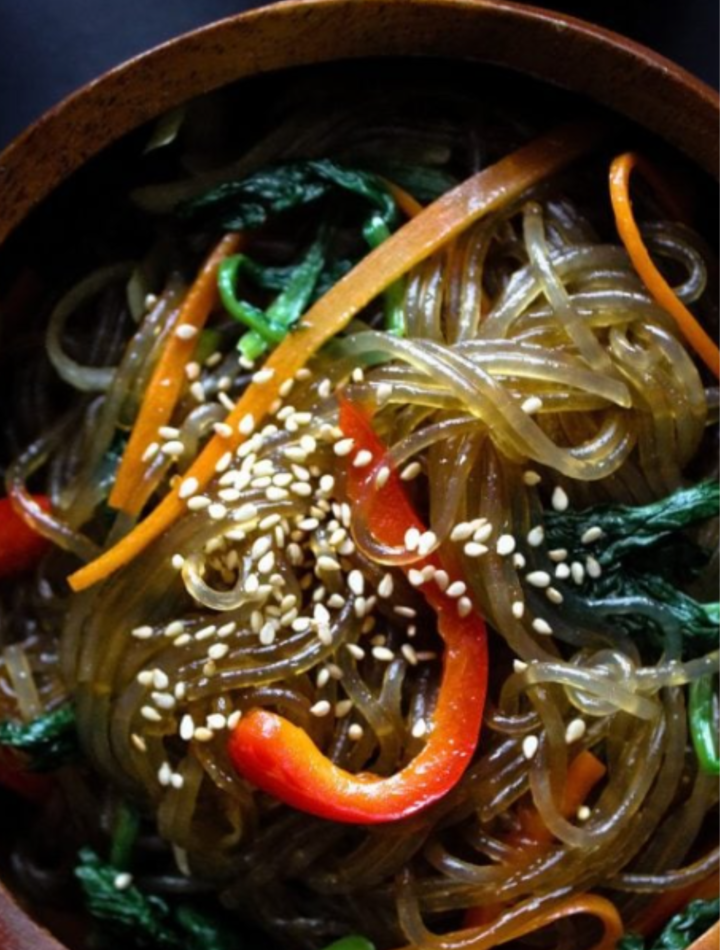
Japchae – Korean Glass Noodles Stir-Fry with Sweet Soy Sauce
Japchae is one of Korea’s most beloved dishes, known for its glossy glass noodles, colorful vegetables, savory-sweet sauce, and satisfying texture. Often served during celebrations, holidays, birthdays, and family gatherings, Japchae combines chewy sweet potato noodles with stir-fried vegetables and a flavorful soy-based sauce. The dish is both elegant and comforting, making it a favorite in Korean households and restaurants around the world.
Unlike many noodle dishes, Japchae uses noodles made from sweet potato starch, known as dangmyeon, which gives them their signature translucent appearance and pleasantly chewy texture. Combined with fresh vegetables and a sweet soy sauce dressing, Japchae offers a balance of flavors and textures that is truly irresistible.
This recipe creates an authentic-style Japchae that serves 4–6 people and can be enjoyed warm, at room temperature, or even cold.
Why You’ll Love This Recipe
- Authentic Korean flavors
- Naturally dairy-free
- Beautiful presentation with colorful vegetables
- Great for meal prep
- Can be made vegetarian or with beef
- Perfect for parties and gatherings
- Delicious served hot or cold
Preparation Time
- Prep Time: 30 minutes
- Cook Time: 20 minutes
- Total Time: 50 minutes
- Servings: 4–6
Ingredients
For the Noodles
- 8 ounces (225 g) Korean sweet potato glass noodles (dangmyeon)
- Water for boiling
For the Beef (Optional)
- 8 ounces (225 g) beef sirloin, thinly sliced
- 1 tablespoon soy sauce
- 1 teaspoon sesame oil
- 1 teaspoon sugar
- 1 clove garlic, minced
For the Vegetables
- 1 medium carrot, julienned
- 1 small onion, thinly sliced
- 1 red bell pepper, thinly sliced
- 4 ounces (115 g) spinach
- 4 ounces (115 g) shiitake mushrooms, sliced
- 2 green onions, sliced
- 2 cloves garlic, minced
- 1 tablespoon vegetable oil
For the Sweet Soy Sauce
- 4 tablespoons soy sauce
- 2 tablespoons brown sugar
- 1 tablespoon honey
- 2 tablespoons sesame oil
- 1 teaspoon rice vinegar
- ½ teaspoon black pepper
Garnish
- 1 tablespoon toasted sesame seeds
- Extra green onions
- Optional thin strips of cooked egg omelet
Instructions
Step 1: Marinate the Beef
If using beef, place the sliced beef in a bowl.
Add:
- Soy sauce
- Sesame oil
- Sugar
- Garlic
Mix thoroughly and allow the beef to marinate for 15–20 minutes while preparing the other ingredients.
This short marinade adds depth and tenderness to the meat.
Step 2: Prepare the Noodles
Bring a large pot of water to a boil.
Add the sweet potato noodles and cook according to package directions, usually 6–8 minutes.
The noodles should become soft but remain pleasantly chewy.
Drain immediately and rinse under cold water to stop the cooking process.
Using kitchen scissors, cut the noodles several times to create shorter lengths that are easier to eat.
Place the noodles in a large mixing bowl.
Step 3: Make the Sauce
In a small bowl combine:
- Soy sauce
- Brown sugar
- Honey
- Sesame oil
- Rice vinegar
- Black pepper
Whisk until the sugar dissolves.
Set aside.
This sauce provides the signature sweet-savory flavor that makes Japchae so popular.
Step 4: Cook the Spinach
Bring a small pot of water to a boil.
Blanch the spinach for about 30 seconds.
Drain and immediately transfer to cold water.
Squeeze out excess moisture and roughly chop the spinach.
Set aside.
Blanching helps preserve the vibrant green color while maintaining tenderness.
Step 5: Stir-Fry the Vegetables
Heat a large skillet or wok over medium-high heat.
Add half the vegetable oil.
Cook the onions for about 2 minutes until slightly softened.
Add carrots and bell peppers.
Stir-fry for 3–4 minutes until tender-crisp.
Remove and set aside.
Add the remaining oil.
Cook the mushrooms until lightly browned and their moisture evaporates, approximately 4 minutes.
Add garlic and cook for 30 seconds until fragrant.
Transfer the mushrooms to the vegetable plate.
Cooking the vegetables separately preserves their individual textures and colors, which is an important characteristic of traditional Japchae.
Step 6: Cook the Beef
Using the same pan, add the marinated beef.
Cook over medium-high heat for 3–4 minutes until browned and fully cooked.
Remove from heat.
If making a vegetarian version, simply omit this step and consider adding extra mushrooms or tofu.
Step 7: Combine Everything
Place the cooked noodles in a large mixing bowl.
Pour about three-quarters of the sauce over the noodles.
Using tongs or clean hands, toss until evenly coated.
Add:
- Cooked vegetables
- Spinach
- Beef
- Green onions
Mix thoroughly.
Taste and add the remaining sauce if desired.
The noodles should appear glossy and evenly seasoned.
Step 8: Final Stir-Fry
For the best flavor, return everything to a large skillet.
Cook over medium heat for 2–3 minutes while tossing continuously.
This final step allows the noodles to absorb the sauce and brings all components together.
Step 9: Garnish and Serve
Transfer the Japchae to a serving platter.
Sprinkle with:
- Toasted sesame seeds
- Green onions
- Egg strips (optional)
Serve immediately or at room temperature.
Tips for Perfect Japchae
Use Authentic Sweet Potato Noodles
Traditional Korean glass noodles are made from sweet potato starch and provide the signature chewy texture.
Substituting rice noodles or bean thread noodles will create a different result.
Avoid Overcooking
The noodles should remain slightly chewy.
Overcooked noodles become mushy and lose their pleasant texture.
Cook Vegetables Separately
While it requires a little more effort, cooking each vegetable individually maintains color, texture, and flavor.
This technique is commonly used in Korean cooking.
Balance Sweetness
Different soy sauce brands vary in saltiness.
Taste before adding all of the sauce and adjust sweetness to your preference.
Delicious Variations
Chicken Japchae
Replace beef with thinly sliced chicken breast or chicken thighs.
Seafood Japchae
Add shrimp, squid, or scallops for a seafood-inspired version.
Vegetarian Japchae
Skip the meat and increase the mushrooms.
Firm tofu also works wonderfully.
Spicy Japchae
Add:
- 1 teaspoon gochugaru (Korean chili flakes)
- 1 tablespoon gochujang
for a spicy twist.
Extra Vegetable Japchae
Include:
- Broccoli
- Bok choy
- Snow peas
- Zucchini
- Purple cabbage
for added nutrition and color.
Storage and Reheating
Japchae stores exceptionally well.
Refrigerator
Store in an airtight container for up to 4 days.
Freezer
Freeze for up to 2 months.
Thaw overnight before reheating.
Reheating
Warm gently in a skillet with a splash of water or sesame oil.
Microwave reheating also works well.
Nutritional Benefits
A serving of Japchae provides:
- Protein from beef or tofu
- Fiber from vegetables
- Iron and B vitamins from meat
- Antioxidants from colorful vegetables
- Healthy fats from sesame oil
Approximate nutrition per serving:
- Calories: 340–420
- Protein: 15–20 g
- Carbohydrates: 45–55 g
- Fat: 10–15 g
- Fiber: 4–6 g
Values vary depending on ingredients used.
Final Thoughts
Japchae is a wonderful example of Korean cuisine’s ability to combine simple ingredients into a dish that is both visually stunning and deeply satisfying. The chewy sweet potato noodles, crisp vegetables, tender beef, and sweet soy sauce create a harmonious blend of flavors and textures that appeals to nearly everyone.
Whether you’re preparing a festive meal, exploring Korean cooking for the first time, or simply looking for a unique noodle dish, this Japchae recipe delivers authentic flavor and beautiful presentation. Serve it as a main course, side dish, or part of a larger Korean feast, and enjoy one of Korea’s most cherished culinary traditions right at home.