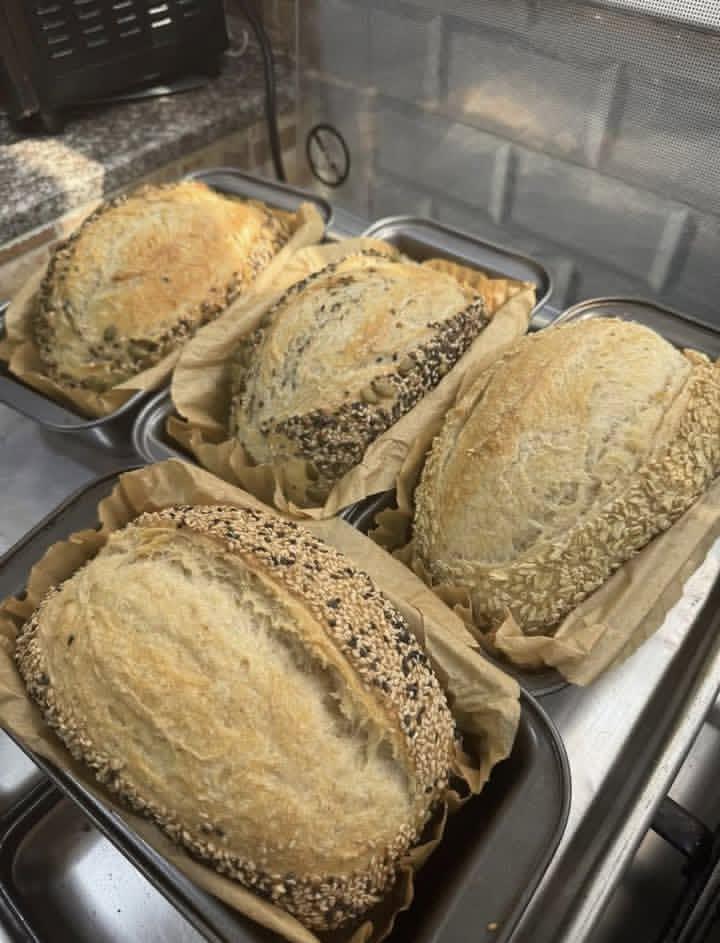
There’s something incredibly satisfying about baking a homemade loaf of seeded sourdough bread. The crackling crust, the chewy interior, and the nutty crunch from a variety of seeds make this bread a true bakery-style treat. Whether you enjoy it toasted with butter, topped with avocado, or alongside a warm bowl of soup, this seeded sourdough loaf delivers exceptional flavor and texture in every bite.
This recipe uses a naturally fermented sourdough starter, which gives the bread its signature tangy taste and beautiful rise. The addition of sesame seeds, black sesame seeds, pumpkin seeds, and oats creates a rustic artisan loaf that looks as impressive as it tastes.
🛒 Ingredients
For the Dough
3½ cups bread flour 🌾
1¼ cups water, room temperature 💧
½ cup active sourdough starter 🫙
2 teaspoons salt 🧂
For the Seed Topping
Choose any combination of:
Sesame seeds
Black sesame seeds
Pumpkin seeds
Rolled oats
You can also add sunflower seeds, flaxseeds, or poppy seeds if desired.
👩🍳 Instructions
Step 1: Prepare the Dough
In a large mixing bowl, combine the active sourdough starter and water. Stir until the starter is mostly dissolved. Add the bread flour and mix until a shaggy dough forms. At this stage, the dough may look rough and uneven, which is completely normal.
Cover the bowl with a clean kitchen towel and let it rest for about 30 minutes. This resting period, known as the autolyse, allows the flour to fully hydrate and helps develop gluten naturally.
Step 2: Add the Salt
After the dough has rested, sprinkle the salt over the surface. Using damp hands, gently fold and knead the salt into the dough until fully incorporated.
The dough will become smoother as you work with it. Don’t worry if it still feels sticky—sourdough doughs are naturally wetter than traditional yeast breads.
Step 3: Bulk Fermentation
Cover the bowl and let the dough rise at room temperature for 4 to 6 hours. During this time, perform a series of stretch-and-folds every 30 minutes for the first 2 hours.
To perform a stretch-and-fold:
Wet your hands.
Grab one side of the dough.
Stretch it upward gently.
Fold it over itself.
Rotate the bowl and repeat on all four sides.
These folds strengthen the dough and help create the beautiful open crumb that sourdough bread is famous for.
As fermentation progresses, the dough should become puffier, smoother, and noticeably more elastic.
Step 4: Shape the Dough
Lightly flour your work surface and carefully turn the dough out onto it.
Gently shape the dough into a round loaf by pulling the edges toward the center and creating surface tension. Avoid pressing out too much air, as those trapped bubbles contribute to the loaf’s light texture.
Once shaped, let the dough rest for 15 to 20 minutes.
Step 5: Add the Seed Coating
Place your chosen seed mixture on a large plate or shallow dish.
Lightly mist or brush the surface of the dough with water. Carefully roll the top of the loaf in the seed mixture, pressing gently so the seeds adhere.
The combination of sesame seeds, pumpkin seeds, black sesame seeds, and oats not only looks beautiful but also creates a flavorful, crunchy crust.
Step 6: Final Proof
Place the shaped dough seam-side up in a floured proofing basket or bowl lined with a heavily floured towel.
Cover and allow the dough to proof for 1 to 2 hours at room temperature, or refrigerate overnight for enhanced flavor development.
An overnight cold proof often results in a deeper sourdough flavor and makes scoring easier before baking.
Step 7: Preheat the Oven
About 45 minutes before baking, place a Dutch oven with its lid inside your oven.
Preheat the oven to 450°F (230°C).
The hot Dutch oven helps create steam during baking, which contributes to a beautifully crisp crust and excellent oven spring.
Step 8: Score the Dough
Carefully remove the hot Dutch oven.
Turn the dough onto a piece of parchment paper so the seeded side faces upward.
Using a sharp bread lame or razor blade, make one deep slash across the top of the loaf. This score allows the bread to expand properly during baking.
Step 9: Bake the Bread
Carefully lower the dough into the hot Dutch oven using the parchment paper.
Cover with the lid and bake for 25 minutes.
After 25 minutes, remove the lid and continue baking for another 20 to 25 minutes until the crust is a rich golden brown and deeply crisp.
The seeds should be lightly toasted and fragrant.
The internal temperature of the bread should reach approximately 205–210°F (96–99°C) when fully baked.
Step 10: Cool Completely
Transfer the finished loaf to a wire rack and allow it to cool completely before slicing.
This step requires patience but is extremely important. Cutting into hot bread can result in a gummy interior because the crumb is still setting.
Allow at least 1 hour of cooling time for the best texture.
🌟 Serving Suggestions
This seeded sourdough bread is incredibly versatile. Try serving it with:
Salted butter and honey
Avocado and poached eggs
Cream cheese and smoked salmon
Homemade soups and stews
Artisan cheeses
Nut butter and fruit preserves
It also makes excellent sandwiches thanks to its sturdy structure and flavorful crust.
🍞 Storage Tips
Store the cooled loaf in a bread bag, paper bag, or wrapped in a clean kitchen towel at room temperature for up to 3 days.
For longer storage, slice the loaf and freeze individual portions in airtight freezer bags for up to 3 months. Toast frozen slices directly from the freezer whenever needed.
❤️ Why You’ll Love This Recipe
This seeded sourdough bread combines everything people love about artisan baking: a crackly golden crust, chewy interior, complex sourdough flavor, and a hearty coating of crunchy seeds. The natural fermentation process enhances both taste and texture while giving the bread a rustic, handcrafted appearance.
Whether you’re a seasoned sourdough baker or trying your first homemade loaf, this recipe delivers reliable results and bakery-quality flavor. Every slice offers a wonderful balance of tangy sourdough, toasted seeds, and wholesome goodness that makes homemade bread truly special. One bite of this freshly baked loaf, and you’ll understand why sourdough remains a timeless favorite among bread lovers everywhere. 🍞✨
Seeded Sourdough Bread Recipe 🍞✨